
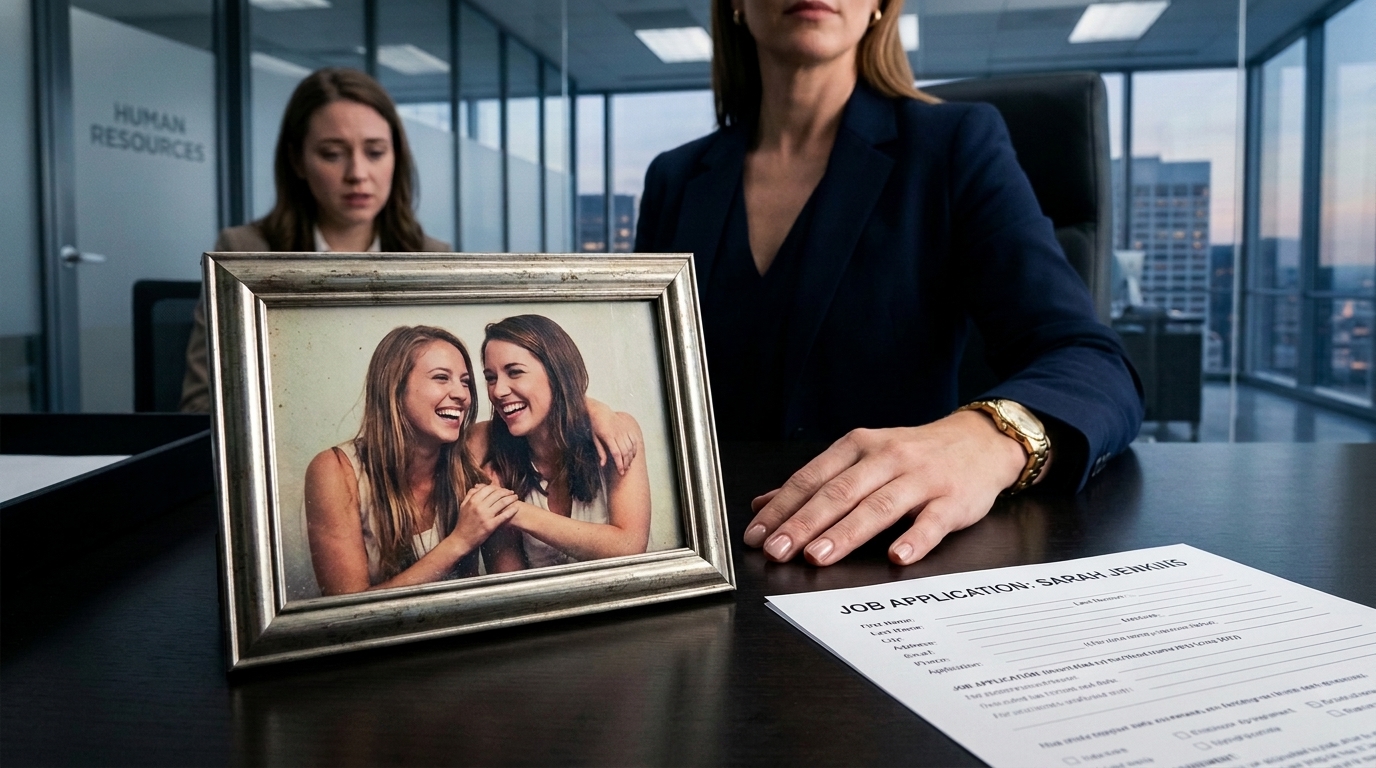
The woman who destroyed my reputation walked into my conference room carrying a résumé about honesty.
For a moment, Vanessa Mercer did not recognize me.
She smiled at the receptionist, adjusted the sleeve of her cream-colored blazer, and thanked the assistant who offered her water. She looked polished, confident, and completely comfortable inside a company she believed might soon belong to her.
Then she saw me sitting at the head of the table.
The smile disappeared.
Her fingers tightened around the leather folder in her hand.
“Rachel?”
I closed the file in front of me.
“Good morning, Vanessa.”
She looked toward the door as if she had entered the wrong room.
Our head of human resources, Maya Chen, sat to my right. Our general counsel, Daniel Price, sat on my left. Neither of them spoke.
Vanessa looked back at me.
“I didn’t know you worked here.”
“I don’t work here,” I said. “I own it.”
Ten years earlier, Vanessa had watched police officers empty my purse onto a desk.
She had stood beside me while my employer accused me of stealing more than thirty thousand dollars.
She had hugged me while I cried.
Then she had told the police that she was afraid I might be guilty.
Now she was applying to become Director of Operations at the company I had built because of what she did to me.
And the interview had only just begun.
Vanessa Cole became my best friend when we were thirteen years old.
She transferred to my school halfway through eighth grade and sat beside me in English class. She had shiny dark hair, a quick smile, and the kind of confidence that made adults forgive her before she had even done anything wrong.
I was quieter.
I followed rules. I returned library books early. I carried extra pens because I worried someone might need one.
Vanessa once told me that I lived as if the world were keeping score.
She lived as if the scoreboard belonged to her.
Still, we fit together.
When my father left, Vanessa slept on the floor beside my bed for three nights because I was too embarrassed to admit I did not want to be alone.
When her parents fought, she came to my house and ate dinner with my mother and me.
We shared clothes, secrets, birthdays, and every bad decision we made before we were old enough to know better.
By twenty-four, we had been friends for eleven years.
That was longer than some marriages.
We both worked at Linden House, an upscale consignment store in Brookdale, Ohio. The store sold antique furniture, estate jewelry, paintings, and expensive decorative pieces that wealthy families no longer wanted but could not bring themselves to throw away.
The owner, Henry Linden, had known my mother for years. He hired me as an inventory clerk and eventually promoted me to assistant bookkeeper.
Vanessa started six months after I did.
I recommended her.
That detail followed me for years.
I was the one who brought her inside.
Vanessa was good with customers. She remembered names, noticed expensive watches, and knew exactly when to compliment someone without sounding desperate.
People liked her immediately.
Henry liked that she could sell.
I liked having my best friend beside me.
At the time, my mother had recently undergone heart surgery. Even with insurance, the bills were more than we could manage. I worked extra hours and stopped buying anything that was not necessary.
Vanessa knew how worried I was.
She knew the exact amount in my savings account.
She knew I had missed two credit-card payments.
She knew I sometimes sat in my car after work, trying to decide which bill could wait another week.
I had told her everything because she was my best friend.
Later, those details became her evidence against me.
The first shortage appeared in March.
A cash deposit was nine hundred dollars lower than the daily reconciliation sheet.
Henry blamed a counting error.
The next shortage was larger.
Then a vendor return was entered into the system, but the refund never reached the business account.
By June, more than twelve thousand dollars could not be explained.
Henry became suspicious of everyone.
He changed the office locks. He required two signatures on deposits. He reviewed employee schedules and questioned us individually.
Vanessa sat beside me during lunch one afternoon and shook her head.
“Someone here is going to jail,” she whispered.
I remember looking at her and saying, “I don’t understand how they think they’ll get away with it.”
She stared down at her salad.
“People get away with things all the time.”
I should have heard something in her voice.
But trust does not disappear because of one strange sentence.
Trust explains the sentence for you.
The day my life fell apart began with a sapphire necklace.
It had arrived from the estate of a retired judge’s wife. The necklace contained twenty-three small diamonds surrounding a deep blue sapphire.
Henry valued it at eighty-six hundred dollars.
Because it was one of the most expensive pieces in the store, it remained inside a locked display case. Only Henry, Vanessa, and I had access to the key cabinet.
That Friday, Henry planned to show it to a private buyer.
At eleven that morning, the necklace was gone.
Henry locked the front doors and told everyone to stay inside.
There were six employees working.
He checked the display case, the inventory log, the safe, and the security footage.
The camera facing the jewelry area had stopped recording shortly after closing the night before.
Vanessa stood beside Henry with both hands covering her mouth.
“This can’t be happening,” she kept saying.
Henry called the police.
Two officers arrived and separated us.
They asked who had opened the store, who had closed the night before, and who had access to the keys.
I had closed.
Vanessa had left twenty minutes before me.
At least, that was what the schedule showed.
One of the officers asked whether anyone objected to having their personal belongings searched.
No one did.
I had nothing to hide.
Our purses and bags were stored in an unlocked breakroom at the back of the building.
When the officer picked up my canvas tote, Vanessa moved closer to me.
She touched my arm.
“Everything will be okay,” she whispered.
The officer opened the bag.
He removed my wallet, a phone charger, two hospital statements, a bottle of aspirin, and a paperback novel.
Then he reached deeper.
His hand came out holding a small blue velvet box.
The room became silent.
I knew what it was before he opened it.
Henry looked at me as if I had become a stranger in front of him.
“No,” I said.
The officer lifted the lid.
The sapphire necklace lay inside.
I could not breathe.
“That isn’t mine.”
Vanessa stepped backward.
I turned toward her because I expected her to defend me.
Instead, she looked frightened.
Not frightened for me.
Frightened of me.
“Vanessa,” I said. “Tell them.”
Her eyes filled with tears.
“Tell them what?”
“That I didn’t do this.”
“I don’t know what happened.”
“You know me.”
She looked toward the police officer.
“Rachel has been under a lot of pressure lately.”
I felt something inside me split open.
“What are you talking about?”
She lowered her voice.
“Your mom’s medical bills. Your credit cards. You told me you didn’t know what you were going to do.”
The officer turned toward me.
Vanessa began crying.
She said she hated herself for speaking, but she had seen me staying late after everyone left. She said I had recently asked how pawn shops identified stolen jewelry. She said I had complained that Henry underpaid me.
Some of those statements contained pieces of truth.
I had stayed late.
I had asked about pawn shops after watching a television documentary.
I had complained about my salary during a private conversation with my best friend.
She took harmless parts of my life and rearranged them until they looked like guilt.
The police photographed the necklace and searched my car.
They asked me to come to the station for an interview.
I was not arrested that day.
There was no video of me taking the necklace. There were no stolen items at my apartment. None of the missing cash had entered my bank account.
But the necklace had been found in my bag.
That was enough for Henry.
He fired me before the police finished their investigation.
He would not look me in the eyes.
“I have to protect the business,” he said.
“I didn’t steal from you.”
“I hope that’s true.”
“You’ve known me for years.”
“I also know what they found.”
Vanessa waited outside.
When I walked out carrying a cardboard box filled with my belongings, she opened her arms.
I stepped around her.
“Rachel, please.”
“You told them I was a thief.”
“I told them what I knew.”
“You knew I was innocent.”
Her face hardened for half a second.
Then the tears returned.
“I’m trying to be honest.”
That was Vanessa’s greatest talent.
She could hurt you and make honesty sound like the weapon that had forced her hand.
The prosecutor eventually declined to charge me.
There was not enough evidence to prove I had taken the cash or the necklace. The breakroom was accessible to every employee. The security camera had failed. My computer credentials had been used for some of the suspicious transactions, but several employees knew how to access the accounting system.
Legally, I was not guilty.
In Brookdale, that did not matter.
People did not say the charges had been dropped.
They said I had escaped prosecution.
A local community page posted my name beside a photograph of Linden House.
A former classmate wrote that she had always found me strange.
A woman I barely knew claimed I had stolen money from a school fundraiser when I was sixteen.
That had never happened.
Within days, lies began multiplying around the original lie.
My mother stopped going to church because people stared at her.
Someone left an envelope in our mailbox containing a photocopy of the Seventh Commandment.
You shall not steal.
I applied for jobs and received no response.
One manager interviewed me for twenty minutes before asking whether I was “the Linden House girl.”
He ended the meeting immediately.
Vanessa called me every day during the first week.
She cried. She said she missed me. She insisted she had only answered the officers’ questions.
Then her calls became less frequent.
After two weeks, they stopped.
I drove to her apartment one night.
Her car was outside, but she did not answer.
I called from the parking lot.
She sent me a text.
I think we need space until everything settles down.
I stared at the message for a long time.
I replied:
You know I didn’t do it.
Three dots appeared.
Then disappeared.
She never answered.
The next month, Vanessa was promoted into my position.
I learned about it from a former coworker.
That was the moment I stopped hoping she would come back and tell the truth.
I still did not understand how she had done it, but I understood that she had gained something from my destruction.
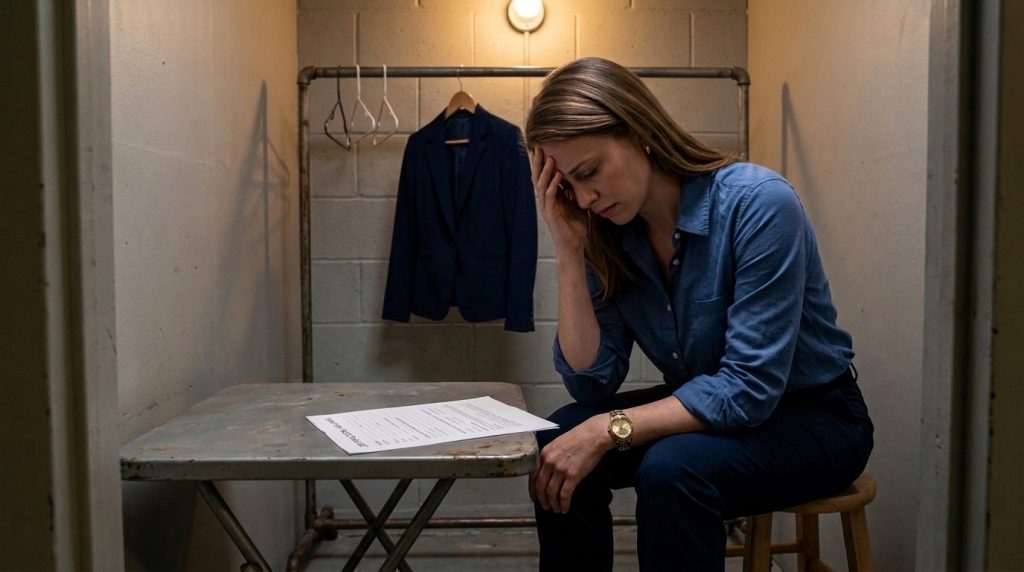
I left Brookdale that winter.
My mother moved in with her sister, and I relocated to Columbus with three hundred and forty dollars, two suitcases, and a box of documents proving that no court had convicted me of anything.
I rented a room above a laundromat.
During the day, I worked at a call center.
At night, I took bookkeeping courses at a community college.
I stopped telling people about Linden House.
When someone asked why I had left, I said the business had downsized.
That lie kept me employed.
For almost two years, I looked over my shoulder whenever someone searched my name.
I assumed every closed office door meant someone had discovered my past.
I believed one accusation could follow me forever.
Then I met a woman named Helen Brooks.
Helen owned a small payroll company and hired me as a junior account specialist. During my second week, she found me rechecking a client file long after everyone else had gone home.
“You’ve checked that twice,” she said.
“I want to be sure.”
“Being careful is good. Being afraid is expensive.”
I looked at her.
She pulled up a chair.
“What happened to you?”
I do not know why I told her.
Maybe I was tired of carrying the story alone.
I explained everything—the missing money, the necklace, Vanessa’s statements, the investigation, and the way people had decided that suspicion was the same as proof.
Helen listened without interrupting.
When I finished, she said, “Your old employer had terrible controls.”
I had expected sympathy.
Instead, she gave me an education.
One person should not have been able to access the inventory keys and accounting system.
Employee passwords should never have been shared.
Security failures should have triggered automatic alerts.
Reconciliations should have been independently reviewed.
The system had depended on trust.
Trust had failed.
“You weren’t protected,” Helen said. “Neither was the business.”
That sentence changed my life.
I began studying fraud prevention, inventory controls, and forensic accounting.
I earned certifications.
I learned how small inconsistencies revealed larger patterns.
I learned that most fraud did not begin with a criminal mastermind.
It began with access, opportunity, and the belief that no one was watching carefully enough.
Seven years after leaving Brookdale, I founded Northline Integrity.
We developed software and audit systems for independent retailers, medical offices, restaurants, and family-owned companies.
Our goal was simple: no employee should be able to steal without leaving a trail, and no innocent person should be blamed because an employer failed to create one.
The company grew slowly at first.
Then quickly.
By our fifth year, Northline employed more than one hundred people and worked with clients across fourteen states.
I stayed away from cameras.
Our chief operating officer handled interviews. Our marketing department used the company logo instead of my face. My biography appeared on our website, but there was no photograph beside it.
I told myself I valued privacy.
The truth was more complicated.
Part of me was still the woman walking out of Linden House with a cardboard box.
I had built a company devoted to truth, yet I remained afraid that one old lie could still destroy me.
Then Vanessa’s résumé appeared in my inbox.
The email came from Maya, our head of human resources.
We had been searching for a new Director of Operations. Because the position involved replacing an executive who had not yet announced his departure, we used a recruitment agency that kept Northline’s identity confidential during the early stages.
Maya’s message contained the profiles of three finalists.
The second résumé belonged to Vanessa Cole Mercer.
I recognized her before I read the name.
She had attached a professional photograph.
Her hair was shorter. Her face was thinner. There were small lines around her eyes that had not been there ten years earlier.
But the smile was the same.
I opened the résumé.
Vanessa described herself as an ethical operations leader with extensive experience in loss prevention and financial accountability.
Under Linden House, she had written:
Implemented internal controls that identified employee theft and reduced inventory losses by forty percent.
I read the sentence three times.
She had turned what she did to me into a professional achievement.
Her résumé listed several positions after Linden House. Regional manager. Operations consultant. Director of vendor relations.
Her most recent employer was Hartwell Furnishings, a chain of luxury furniture stores.
According to the résumé, she had left Hartwell voluntarily to pursue leadership opportunities.
I closed the file.
For a few minutes, I sat alone in my office listening to the air conditioner.
Then I called Maya and Daniel.
When they arrived, I turned my screen toward them.
“This candidate and I have a history,” I said.
I told them everything.
Maya looked horrified.
Daniel remained quiet until I finished.
“Do you want her removed from consideration?” he asked.
Every part of me wanted to say yes.
I wanted her résumé deleted.
I wanted her rejection email sent before she finished breakfast.
I wanted her to wonder why another opportunity had disappeared.
But that would have been easy.
And it would have left me with no answers.
“No,” I said. “Continue the process exactly as you would for any finalist.”
Maya frowned.
“Rachel, you don’t owe her an interview.”
“This isn’t about what I owe her.”
Daniel studied me.
“What is it about?”
“I want to know whether the person on this résumé is the same person I remember.”
Daniel leaned back.
“We need boundaries. You cannot use the hiring process to interrogate her about a personal matter.”
“I understand.”
“Any background review must follow the same procedures we use for other executive candidates.”
“Agreed.”
“You cannot promise employment or create a false opportunity.”
“I won’t.”
Maya looked at the résumé again.
“Are you sure you want to sit across from her?”
“No,” I said. “But I’m going to.”
Northline’s executive screening process was extensive.
Candidates signed written authorization allowing us to verify employment, education, references, and professional claims. Senior operational positions also required a financial-responsibility review because they involved access to client systems.
Within four days, the problems began.
Hartwell Furnishings would not confirm that Vanessa had resigned voluntarily.
Their human-resources director stated only that she was not eligible for rehire.
Two earlier employers gave similar responses.
One of Vanessa’s references used a company email address that did not exist.
Another reference appeared to be her cousin.
Then our screening investigator contacted Linden House.
Henry Linden had died three years earlier. The store was now operated by his daughter, Claire.
When Claire heard Vanessa’s name, she became quiet.
Then she asked whether the investigator also knew Rachel Bennett.
The investigator said yes.
Claire requested my phone number.
She called me that evening.
“I don’t know how to say this,” she began.
“You can say it directly.”
“My father believed you were innocent before he died.”
I gripped the phone.
“Why didn’t he contact me?”
“He was ashamed.”
I said nothing.
Claire explained that Henry’s health had declined shortly after the investigation. Linden House struggled, and he eventually sold most of the inventory.
While clearing his office after his death, Claire found a file with my name on it.
Inside was a copy of the police report, handwritten notes, and a letter Henry had written to me but never mailed.
He had discovered that several suspicious transactions occurred after I had clocked out.
He also learned that the security camera had not failed on its own. Someone had manually disconnected it using the manager access panel.
The access log identified Vanessa’s employee code.
“Why wasn’t that given to the police?” I asked.
“My father found it months later. By then, he was convinced reopening the case would destroy what remained of the store. He told himself there still wasn’t enough proof.”
“He protected the business again.”
“Yes.”
Claire’s voice cracked.
“I’m sorry.”
I closed my eyes.
An apology from the wrong person can still hurt.
Claire sent the documents to Daniel.
They supported my innocence, but they did not prove Vanessa had placed the necklace in my bag.
That proof came two days later.
Her name was Angela Ruiz.
Angela had worked part-time at Linden House when she was nineteen. I remembered her as a nervous college student who rarely spoke during staff meetings.
Northline’s investigator contacted her while verifying Vanessa’s employment history.
Angela asked to speak with me privately.
When we connected by video call, she began crying before I said hello.
“I saw her near your bag,” she said.
My body went cold.
“Vanessa?”
Angela nodded.
“The morning the necklace disappeared. I came in through the loading entrance. She was in the breakroom. She had your tote open.”
“Why didn’t you say anything?”
“She told me you had asked her to get your medication.”
I stared at the screen.
Angela wiped her face.
“Later, after the police arrived, she pulled me aside. She said I needed to remember that you had been acting suspiciously. She said Henry might give me more hours if I was loyal.”
“Did you lie to the police?”
“I said I hadn’t seen anything.”
That answer hurt, but not as much as what came next.
Angela still had an old phone backed up to her cloud account.
On it were messages Vanessa had sent after my termination.
One read:
You didn’t see me in the breakroom. Rachel was already in trouble. Don’t make this worse for yourself.
Another said:
Henry thinks she took the cash too. Let him. We both need our jobs.
Angela had kept the messages because she was afraid Vanessa might blame her next.
She had spent ten years regretting her silence.
“I tried to find you once,” she said. “But I was ashamed.”
“So you stopped looking?”
She lowered her head.
“Yes.”
I wanted to be angry.
Part of me was.
But Angela had been nineteen, frightened, and manipulated by the same person who had manipulated me.
“Will you give a formal statement?” I asked.
“Yes.”
“Even if it becomes public?”
“Yes.”
Daniel forwarded the evidence to the Brookdale Police Department.
The old theft case was likely outside the time limit for prosecution. But clearing my name was no longer the only issue.
Northline’s background inquiry had caused Hartwell Furnishings to review Vanessa’s departure more carefully.
Their controller discovered that more than one hundred and forty thousand dollars had been paid to a vendor called Meridian Returns during Vanessa’s final eighteen months with the company.
Meridian had no website, no warehouse, and no legitimate business registration.
The mailing address belonged to a property owned by Vanessa’s brother.
Hartwell contacted police.
This time, the theft was recent.
This time, there were bank transfers, email records, and digital approvals.
This time, Vanessa had left a trail.
We could have canceled the final interview.
The police could have approached Vanessa somewhere else.
But by then, she had already received the address and confirmed her appointment.
Investigators asked us not to warn her while they prepared a warrant connected to the Hartwell case.
Daniel made the rules clear.
We would conduct a legitimate interview.
We would not deceive her.
We would not question her on behalf of the police.
If she chose to discuss Linden House, that was her decision.
At nine fifty-eight on Monday morning, Vanessa entered Northline’s lobby.
At ten o’clock, she walked into the conference room.
When she saw me, every trace of confidence left her face.
“I didn’t know you worked here,” she said.
“I don’t work here. I own it.”
She stared at me.
Maya introduced herself and Daniel.
Vanessa remained standing.
“I think there’s been some mistake.”
“There is no mistake,” Maya said. “Please sit down.”
Vanessa lowered herself into the chair across from me.
She looked around the room.
The glass walls, the city skyline, the Northline logo behind my chair.
I could almost see her calculating how this had happened.
“You changed your hair,” she said.
It was such a small, foolish sentence that I nearly laughed.
“So did you.”
Maya began the interview.
She asked about staffing, vendor management, and employee accountability.
Vanessa recovered quickly.
Within minutes, her professional voice returned.
She spoke about transparency, culture, and ethical leadership.
She said strong companies protected themselves by hiring people of character.
Then Maya asked about Linden House.
“Your résumé says you implemented controls that identified employee theft,” she said. “Can you explain that experience?”
Vanessa looked at me.
“We had an employee who was stealing inventory and cash.”
“What was your role in identifying the theft?”
“I noticed inconsistencies and brought them to the owner.”
That was a lie.
Henry had discovered the shortages.
“Was the employee convicted?” Maya asked.
Vanessa hesitated.
“No. There wasn’t enough evidence for criminal charges.”
“Then how did you determine that the employee committed the theft?”
“The missing jewelry was found in her personal bag.”
“Did you see her take it?”
“No.”
“Did anyone?”
“Not that I know of.”
Maya looked down at the résumé.
“Yet you described the matter as identified employee theft.”
Vanessa shifted in her chair.
“The owner concluded she was responsible.”
Daniel spoke for the first time.
“Did you tell the owner that the security camera had been manually disconnected using your employee access code?”
The color drained from Vanessa’s face.
“I don’t remember that.”
“We have the access record.”
“I haven’t worked there in ten years.”
Daniel placed a copy of the log on the table.
Vanessa did not touch it.
“This is inappropriate,” she said. “Rachel obviously arranged this to embarrass me.”
I kept my voice calm.
“You applied for an executive position at my company. Every finalist receives the same background review.”
“You let me come here because you wanted revenge.”
“I let the process continue because I wanted the truth.”
She looked toward Maya.
“You can’t seriously believe her. She was accused of theft.”
Maya’s expression did not change.
“She was never charged.”
“She had the necklace in her bag.”
Daniel placed another document on the table.
It was Angela’s signed statement.
Vanessa read the first page.
Her mouth tightened.
“She’s lying.”
“She included your messages,” Daniel said.
“Messages can be altered.”
“They were independently verified.”
Vanessa pushed the papers away.
“This is insane.”
I had imagined this conversation for years.
In some versions, I screamed.
In others, Vanessa collapsed and confessed immediately.
The reality was quieter.
She sat across from me, still searching for someone else to blame.
“Why did you do it?” I asked.
Daniel glanced at me but did not interrupt.
Vanessa shook her head.
“I didn’t.”
“You used my access information.”
“No.”
“You disconnected the camera.”
“I don’t remember.”
“You placed the necklace in my bag.”
“I said I didn’t.”
“You told the police about my mother’s medical bills because you knew it gave me a motive.”
Her voice rose.
“You were desperate.”
“I was struggling. That did not make me a thief.”
“You complained every day.”
“To my best friend.”
Vanessa looked away.
For the first time since she entered the room, her expression changed.
Not into guilt.
Into resentment.
“You always acted like you were better than everyone,” she said.
I leaned back.
“There it is.”
“What?”
“The reason.”
She laughed bitterly.
“You think everything is about you.”
“You framed me for theft.”
“I was working twice as hard, and Henry kept promoting you.”
“I recommended you for the job.”
“And you made sure everyone knew it.”
“That isn’t true.”
“You were the responsible one. Rachel remembered everything. Rachel never made mistakes. Rachel took care of her sick mother. Everyone trusted Rachel.”
Her voice had lost its polished rhythm.
“I was tired of standing beside you while people talked about how good you were.”
“So you stole from Henry?”
She looked toward Daniel.
“I’m not answering that.”
“You did more than steal,” I said. “You used everything I had told you in confidence to make the lie believable.”
Vanessa’s eyes filled with tears.
Ten years earlier, those tears would have confused me.
Now I understood them.
Vanessa cried when she lost control of the room.
“You don’t know what my life was like then,” she said.
“You lived with me half the week.”
“My father had gambling debts. My mother was losing the house. I needed money.”
“You could have asked me for help.”
“You had nothing.”
The words landed between us.
She realized too late what she had admitted.
Not the theft itself.
The motive.
The knowledge.
The contempt.
Vanessa pressed her lips together.
“I didn’t mean for it to go as far as it did,” she whispered.
Maya stopped writing.
Daniel looked directly at her.
“What did you not intend?”
Vanessa froze.
I waited.
She shook her head.
“No. You’re twisting my words.”
“What did you think would happen?” I asked. “When they found the necklace?”
“I thought Henry would question you.”
“And then?”
“I thought he might fire you.”
“You knew people would believe it because I was in debt.”
“I didn’t know the police would come.”
“You let them search my home.”
“I was scared.”
“You accepted my position after I was fired.”
“I needed the job.”
“You watched my mother become ashamed to leave her house.”
“I didn’t do that.”
“You never corrected the lie.”
“I couldn’t.”
“You could have told the truth at any time.”
Vanessa wiped her face.
“And ruin my life?”
I stared at her.
She had finally said it plainly.
My life had been an acceptable price for protecting hers.
She leaned forward.
“You recovered. Look at this place. Look at what you built.”
“That does not erase what you did.”
“But you’re successful.”
“I became successful while carrying a crime with my name attached to it.”
“You’re acting like I destroyed you.”
“You tried.”
She looked around the conference room again.
A strange smile appeared.
“Maybe I’m the reason you built all of this.”
“No,” I said. “I built it despite you.”
The smile disappeared.
Maya closed her folder.
“This concludes the interview.”
Vanessa stood.
“You were never going to hire me.”
“You were evaluated under the same standards as every finalist,” Maya said. “Your résumé contained false statements, unverifiable references, and serious inconsistencies.”
Vanessa looked at me.
“You planned this.”
“I spent ten years believing I needed a perfect moment to defeat you,” I said. “I didn’t. I only needed to stop protecting your lie.”
She picked up her folder.
At the door, she turned back.
“What are you going to do?”
“The truthful thing.”
She left.
Through the glass wall, I watched her walk across the lobby.
Two investigators met her near the elevator.
One showed her a document.
The other asked her to place her bag on the reception desk.
Vanessa turned toward the conference room.
Even from that distance, I knew she was looking for me.
I did not move closer to the glass.
I did not smile.
I did not feel victorious.
I felt something much quieter.
For the first time in ten years, the consequences moving toward Vanessa did not belong to me.
They belonged to her.
Vanessa was arrested in connection with the Hartwell Furnishings payments.
Investigators found emails showing that she had created fake return orders and approved invoices through Meridian Returns. The payments were routed through several accounts before reaching her.
Hartwell’s losses exceeded one hundred and forty thousand dollars.
She initially denied everything.
Then her brother agreed to cooperate.
The evidence from Linden House was not used to charge her because too much time had passed. But Angela’s statement, the access records, and Vanessa’s interview were enough for Claire Linden to issue a formal correction.
Linden House posted it publicly.
Ten years earlier, our business terminated Rachel Bennett after property was discovered in her personal bag. Newly reviewed records and witness testimony establish that Rachel was not responsible for the theft. We deeply regret the harm caused by our decision and formally withdraw every accusation made against her.
The local newspaper that had once repeated the suspicion published a follow-up story.
They used a photograph of me standing inside Northline’s office.
The headline read:
LOCAL ENTREPRENEUR CLEARED IN DECADE-OLD THEFT ACCUSATION
I sent the article to my mother before calling her.
She answered in tears.
“They finally know,” she said.
“You always knew.”
“I did.”
“Then why does this matter so much?”
“Because you shouldn’t have had to live in a world where only your mother believed you.”
That night, I drove to her house.
She had printed the article and placed it on the kitchen table.
For several minutes, we sat together without speaking.
“I’m sorry I made you leave your home,” I said.
She reached across the table.
“You didn’t make me do anything.”
“People treated you differently because of me.”
“Because of a lie about you.”
I looked down.
My mother squeezed my hand.
“Stop accepting responsibility for things other people chose to do.”
It was the same lesson I had spent ten years teaching companies.
Responsibility needed to remain with the person who created the harm.
Not the person who survived it.
Vanessa eventually pleaded guilty to felony theft and fraud charges connected to Hartwell.
She received a prison sentence of four years, followed by restitution and supervised release.
Before sentencing, she mailed me a letter.
It was six pages long.
She apologized, then explained.
She blamed her parents, Henry, money, jealousy, fear, and the pressure of trying to appear successful.
She wrote that she had thought about confessing many times.
She wrote that seeing me in the conference room felt like being judged by the person who had benefited most from her mistake.
That sentence told me she still did not understand.
I had not benefited from being betrayed.
I had adapted.
There is a difference.
Near the end of the letter, she asked whether I had enjoyed watching her get arrested.
I did not answer.
For years, I had believed revenge would feel like returning the pain exactly as I received it.
I imagined humiliating her publicly.
I imagined destroying her career.
I imagined making her beg me to tell the truth.
But when the truth finally arrived, I did not need to add anything to it.
Vanessa had constructed her life around the belief that other people could always be used as exits.
When money disappeared, blame an employee.
When a friendship became inconvenient, call it honesty.
When a résumé needed improvement, rewrite the past.
When an employer discovered suspicious payments, leave before the audit.
She had escaped every room by setting fire to someone else’s reputation.
Eventually, she entered a room with no unlocked exit.
That was not my revenge.
That was the natural end of the choices she kept making.
Northline hired another candidate for the Director of Operations position.
Her name was Priya Shah.
During her final interview, she described a mistake she had made early in her career. She did not blame her staff or hide behind unclear language.
She explained what happened, whom it affected, and what she changed afterward.
That answer mattered more to me than a perfect résumé.
Six months later, Priya helped us launch a program offering free internal-control reviews to small family businesses.
The first store we assisted was owned by a woman whose employee had been accused of stealing cash.
Our audit found that the shortage came from a faulty payment-system integration.
No one had stolen anything.
The employee kept her job.
I thought about her on the drive home.
She would never know how close she had come to becoming another version of me.
That was enough.
I did not frame the newspaper article clearing my name.
My mother wanted me to.
Instead, I placed Henry Linden’s unsent letter inside a drawer.
His apology mattered, but it did not belong on my wall.
Neither did Vanessa’s confession.
I did not want my office decorated with the worst thing that had happened to me.
Northline’s lobby displayed one sentence beneath the company logo:
Trust people. Verify systems. Protect both.
Visitors sometimes assumed it was simply a business slogan.
For me, it was the entire story.
I had trusted Vanessa completely.
That trust did not make me foolish.
Her betrayal did not make kindness a weakness.
But trust without accountability had allowed her to steal, lie, and choose someone else to carry the consequences.
Ten years later, she came to my company asking me to trust her with operations, employees, finances, and client information.
She believed the interview was the moment karma found her.
It was not.
Karma had been following her for years—in every false reference, every altered invoice, every person she silenced, and every lie she needed to protect the lie before it.
The interview was simply the first time she turned around and saw it.
As for me, I no longer searched my name to see whether the accusation appeared.
I no longer rehearsed explanations for strangers.
I no longer imagined returning to Brookdale and forcing everyone to apologize.
My life had grown larger than the room where they emptied my purse.
Vanessa once took my private fears and used them to create a version of me that people could hate.
For years, I thought clearing my name meant destroying hers.
I was wrong.
Clearing my name meant giving her actions back to her.
The theft was hers.
The lie was hers.
The consequences were hers.
And finally, the rest of my life was mine.
